In recent years, tankless water heaters have become a popular alternative to traditional models.
Also called on-demand or spontaneous water heaters, tankless designs heat water only when needed, which can reduce energy consumption and take up less storage space than water heaters with large tanks.
How Tankless Water Heaters Work
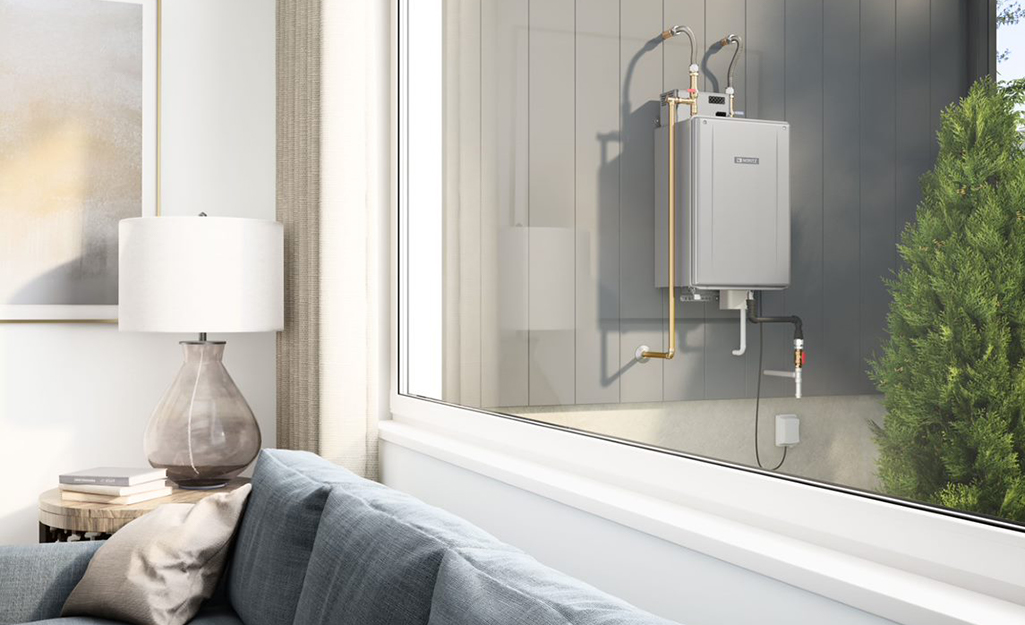
Tankless water heaters produce hot water by heating the water supply as it passes through a heat exchanger. Rather than sourcing water from a hot water tank, tankless water heaters source water from a shared line and heat water on demand. When a hot water faucet is turned on, cold water is supplied and heated in route to the faucet.
Tankless systems can be powered by natural gas, electricity or a combination of the two. As with traditional tank heaters, tankless systems come in a variety of sizes with systems for anywhere from two-person heaters to six or more. Point-of-use tankless water heaters are also available. On average, tankless water heaters provide hot water at a rate of 2-5 gallons per minute, while total output varies from system to system.
The Benefits of Tankless Water Heaters
Tankless water heaters have many benefits, particularly when it comes to energy savings. One of the main reasons for the energy efficiency of tankless water heaters is that no energy is wasted in storing hot water. Whether gas-fired or electric, tankless water heaters heat water only as it is needed and may save up to 70 percent on a yearly heating bill.
For households with up to four people, or that use up to 41 gallons of hot water daily, tankless water systems can be 24-34% more energy-efficient than traditional water heaters. The efficiency rate declines as demand increases. But even homes that use as much as 86 gallons of hot water a day can see energy savings of 8-14% according to the U.S. Department of Energy.
Another advantage of tankless water heaters is longevity and lower operating costs. Compared to storage water heaters, which have a life expectancy of 10-15 years, tankless water heaters can last 20 years or more. In addition, tankless water heaters are integrated systems, featuring replaceable parts which can add years to the life of a system.
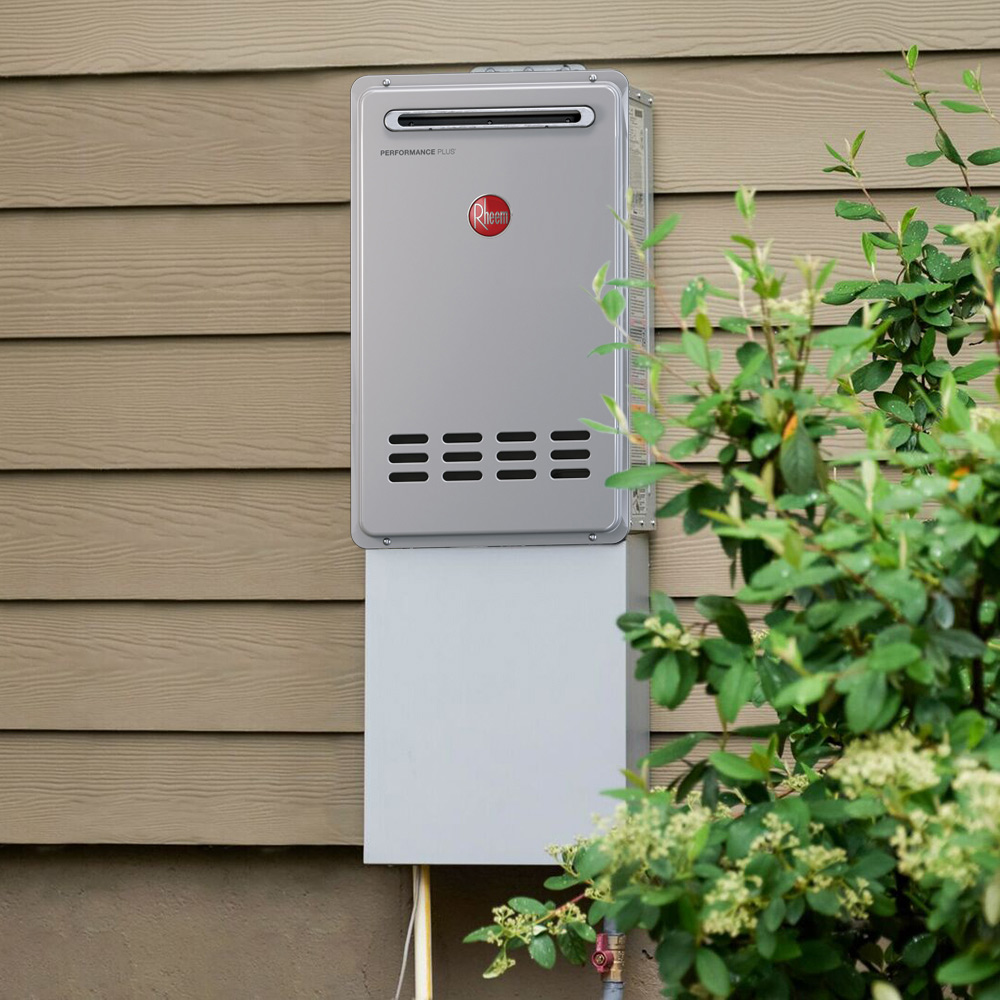
Because of their compact size, many tankless water heaters can be installed in a garage, attic, basement or utility closet without sacrificing floor space.
The Cost of Tankless Water Heaters
Given the benefits of tankless water heaters, you may wonder why everyone doesn’t own one. The main reason is cost. Tankless water heaters are more expensive than conventional water heaters, and they require knowledgeable installation, not unlike their standard counterparts. Also, larger homes may require more than one unit.
Refer to our project guide to learn more about installing a tankless water heater in your home.
Choosing a Tankless Water Heater
There are a wide variety of tankless water heaters on the market. To find the right one for you, you’ll need to consider your water use and the type of water heater you need: gas, electric or point-of-use.
Our tankless water heater guide explores how to choose between the different types to find the best tankless water heater for your home.
Are You Ready to Go Tankless?
Shop tankless water heaters at The Home Depot today.