This guide explores affordable filtration systems found at The Home Depot to remove contaminants, improve taste and protect your pipes. Find whole-house, under-sink, or faucet-mount options to ditch bottled water and invest in cleaner, healthier living!
Clean water is a fundamental necessity for every household and is at-the-ready for most Americans. We turn on the tap and expect clear, refreshing water to flow out. Even if tap water appears fine, the quality of it can vary significantly from one location to another. Public water systems do a commendable job of providing safe drinking water by removing contaminants, but your water might still contain trace amounts of chlorine, lead, pesticides, microplastics and even PFAS (per- and polyfluoroalkyl substances), a synthetic chemical used in consumer products for water and stain resistance. Your tap water may be clear of these bad actors, but sediment in municipal systems can prematurely degrade plumbing fittings, faucets and appliances over time.

Residential water filtration systems are designed to effectively remove or reduce these contaminants, improving both the health and taste of the water and protecting appliances and plumbing fixtures from mineral buildup like calcium, limescale and rust. Depending on the source water, some filters can even remove bacteria or parasites. Options vary from whole-home systems to kitchen drinking water only. Here, we review the options available to help protect your home’s water.
Whole-House Filtration Systems
These systems treat all the water entering your home, providing filtered water at every tap. While the kitchen is typically prioritized, bathroom faucets and showers are also important.
- Robust systems like Freedom Water Systems’ ECO-X 7-Stage Municipal Water Filtration are worth the investment. This system uses a salt-free conditioning process that does not require filter changes and removes chlorine, THMs, heavy metals, PFAS, volatile organic compounds (VOCs), herbicides, pesticides, pharmaceuticals and mineral scale buildup, which can extend the life of plumbing fixtures and appliances. Additionally, it results in pH-balanced, alkaline water, which is ideal for health. It also requires no electricity to filter water, providing clean water anytime. Systems like this Freedom Water Systems product come with a 10-year guarantee and significant positive impact on health. Additional robust Freedom Water Systems products are also available with up to 20-year warranties.
- 2-Stage systems like the Express Water Whole-House Water Filtration System remove sediment as well as chemicals.
- Single-filter systems like the GE Whole-House Water Filtration System last 10,000–15,000 gallons and primarily remove sediment.
- Well water-specific filters like the PRO+AQUA Whole-House Well Water Filtration System remove metals, sediment and hydrogen sulfide, which causes that stinky, sulfur, rotten egg smell.
At-the-Sink Systems
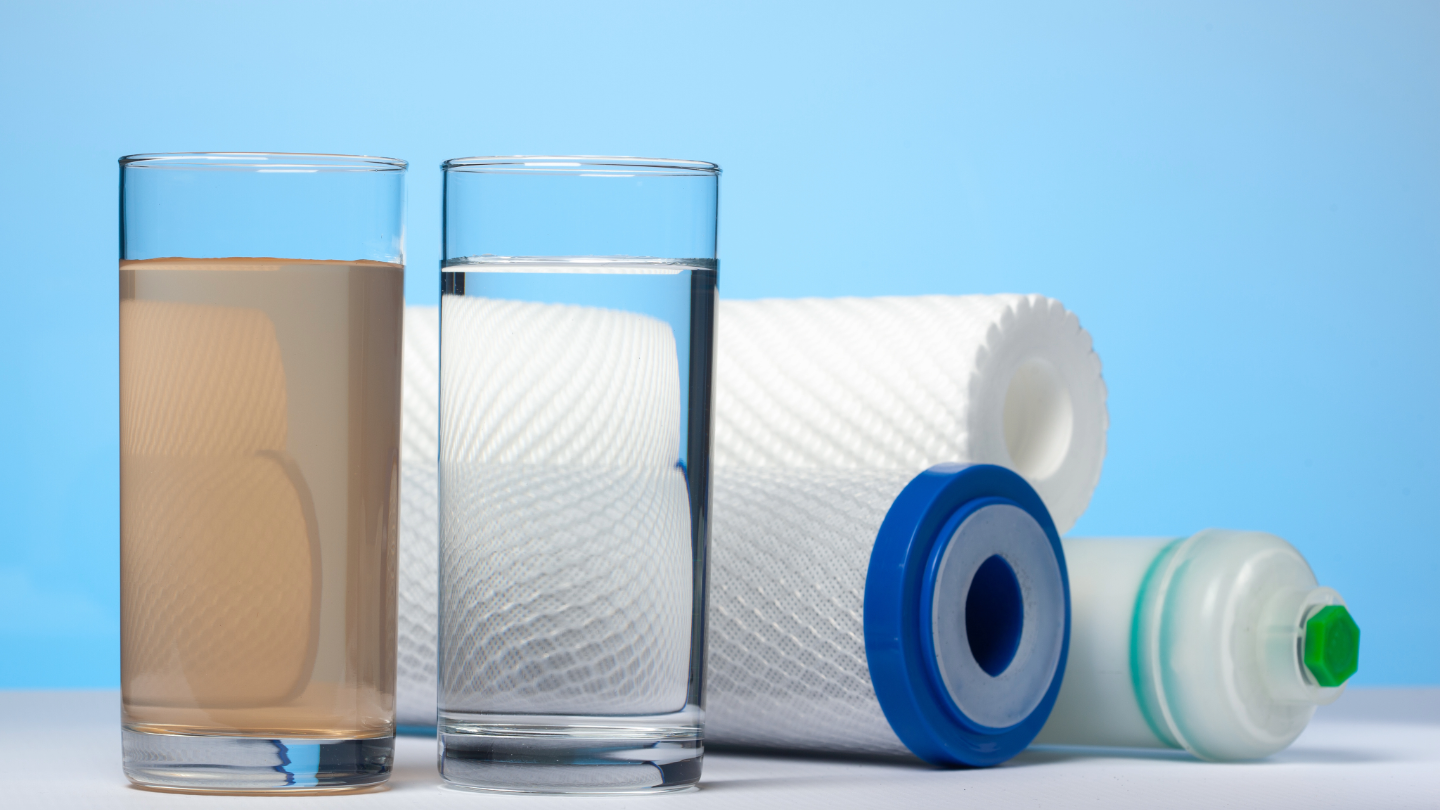
If you’re not ready for a whole-home system but want clean water for drinking and cooking, an under-the-counter system is an excellent choice. These systems vary in price and efficacy and typically remove metals, chlorine, some pharmaceuticals and other impurities. Most under-the-counter filtration systems require filter changes every six months, and many have an easy twist-and-lock design for no-mess replacement. An alternative to installing one of these more robust systems is a faucet-mount filtration system like PUR’s PLUS Faucet-Mount Filter – an affordable option that recommends filter changes every three months, and it’s certified to reduce up to 70 contaminants including lead, mercury and some pesticides. Even countertop filters like Brita brand remove chlorine, mercury, zinc and more.
Reverse Osmosis Systems
There has been some debate as to the safety of reverse osmosis (RO) systems in the past due to concerns that these systems remove too many minerals from water. Since water is not typically the only source of minerals for human health, RO systems are still a highly effective option for home water filtration. They remove arsenic, nitrate, copper and many other harmful contaminants. Remineralization cartridges are available to add back minerals that may have been removed from the water. The Express Water RO Alkaline Water Filtration System removes up to 99% of contaminants, produces alkaline water and adds back essential minerals like calcium, potassium, magnesium and more. It also includes a leak detection feature that will shut off the water flow if excess moisture is detected.
Residential water filtration products are not just a luxury, but also important in today’s world. With options as low as $20, it’s easy to choose healthier water and minimize reliance on bottled water, ultimately reducing plastic consumption and trash. Taking charge of your home’s water quality is an investment in your health and the health of your plumbing and appliances. These solutions are an ideal way to enjoy cleaner, better-tasting water as well as peace of mind.